
If you’re considering tirzepatide for weight management, one question comes up more than almost any other: how long does it take for tirzepatide to start working? It’s a fair question, you want to know what to expect before you commit time, money, and hope to a new treatment.
The honest answer is that tirzepatide begins working in your body almost immediately, but noticeable changes, less hunger, smaller portions, the scale moving, tend to unfold gradually over several weeks. Understanding this timeline can help you set realistic expectations, stay patient during the early adjustment period, and recognize what “working” actually looks like for your body.
In this guide, we’ll walk through what happens week by week, the factors that speed up or slow down your results, and what to do if you feel like progress is stalling. If you’re ready to start your own journey, our medically supervised weight loss program is designed to guide you through every stage of this process, not just hand you a prescription and send you on your way.
How Tirzepatide Works in the Body
Tirzepatide is a dual-action medication that mimics two natural hormones, GLP-1 (glucagon-like peptide-1) and GIP (glucose-dependent insulinotropic polypeptide). These hormones play a role in regulating appetite, blood sugar, and how quickly your stomach empties after eating.
After an injection, tirzepatide is absorbed slowly and reaches its peak concentration in the bloodstream somewhere between 8 and 72 hours. That doesn’t mean you’ll feel dramatically different within a day or two, though. Because tirzepatide has a long half-life (roughly five days), it builds up gradually in your system over the first several weeks of treatment. This is also why doses are typically increased slowly, in a step-up schedule, rather than starting at the highest dose right away.
In practical terms, this means the medication is working in the background from your very first dose but the appetite and weight changes you can actually feel usually take a little longer to show up.
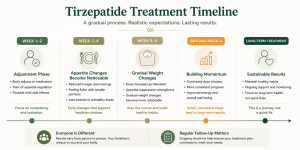
Tirzepatide Weight Loss Timeline: Week by Week
Every person responds differently, and this is meant as a general guide rather than a guarantee. Genetics, starting weight, dose, and lifestyle habits all influence how quickly you notice results.
Week 1–2: The Adjustment Phase
In the first couple of weeks, most people are on the lowest starting dose. This early phase is less about weight loss and more about your body adjusting to the medication.
What you might notice:
- A subtle reduction in hunger between meals
- Feeling satisfied with smaller portions
- Mild digestive side effects, such as nausea, bloating, or changes in bowel habits, as your body adapts
Significant weight loss usually hasn’t started yet at this stage, and that’s completely normal. Gastrointestinal side effects can occur during dose escalation and may improve over time as the body adjusts.
Week 3–4: Appetite Changes Become More Noticeable
By the third and fourth week, many people start to notice a clearer shift in how they think about food. This is often when people search “tirzepatide weight loss results 1 month” because it’s the point where early progress starts to become measurable.
Common changes reported during this window include:
- less frequent thoughts or preoccupation with food (‘food noise’)
- Feeling fuller for longer after meals
- Less interest in high-fat, high-sugar, or highly processed foods
- Early, gradual weight loss, often modest, but a meaningful sign the medication is having an effect
It’s worth noting that people on higher starting doses in clinical research tend to report these changes earlier, while those on lower, more cautious starting doses may take a bit longer to notice the same shifts. Slower isn’t worse, it often means fewer side effects and a smoother long-term path.
Week 5–8: Dose Increases and Steadier Progress
Around the one-month mark, most treatment plans call for a gradual dose increase, assuming the current dose has been well tolerated. This step-up approach is designed to minimize side effects while still moving you toward an effective, sustainable dose.
During this stage, many people notice:
- More consistent appetite suppression
- Continued, gradual weight loss
- Improved ability to stick to healthier eating patterns without feeling deprived
If side effects appear or worsen after a dose increase, they may improve as your body adjusts. Persistent or severe symptoms should be discussed with your healthcare provider.
Beyond Week 8: Building Momentum
As your dose continues to titrate upward over the following months, weight loss for many people becomes more consistent. This is also when Over the following months, changes in weight and other health measures may become more noticeable. Individual responses vary.
Some people reach a point, often somewhere between four to twelve months in, where weight loss slows or plateaus. This is a normal physiological response and doesn’t necessarily mean the medication has stopped working. It’s usually a good time to check in with your care team about whether a dose adjustment or a refresh of your nutrition and activity habits could help.
How Long Does It Take for Tirzepatide to Start Working — Factors That Matter
There’s no single answer to “how long does tirzepatide take to work,” because so much depends on the individual. Here are the main variables that influence your personal timeline:
Starting dose and titration speed:
Tirzepatide is almost always started low and increased gradually. If you and your provider choose a slower titration schedule to reduce side effects, it may take a little longer to feel the full appetite-suppressing effect but this trade-off is often worth it for long-term tolerability.
Body composition and metabolism:
Just as with any medication, Individual factors, including baseline weight, health status, treatment response, and lifestyle habits, can influence how quickly results become noticeable.
Lifestyle and daily habits:
Tirzepatide is meant to be used alongside, not instead of healthy habits. Adequate protein intake, regular movement, consistent sleep, and stress management can all influence how quickly your body responds to treatment.
Consistency with dosing:
Following the prescribed dosing schedule is important for consistent treatment. If you miss a dose, follow your provider’s instructions and the medication’s prescribing information rather than doubling up.
Underlying health conditions:
Underlying health conditions and other medications can influence weight management and treatment response, which is why a healthcare provider should review your medical history before treatment.
This is exactly why we don’t believe in a one-size-fits-all treatment approach. Every plan through Michele Rx starts with a full evaluation of your health history and goals, so your treatment, and your expectations — are grounded in your actual biology, not a generic timeline.
What If You’re Not Noticing Results Yet?
It’s common to feel discouraged if the scale hasn’t moved much in the first couple of weeks. Before assuming the medication “isn’t working,” consider the following:
- Give it time. Most people are still on a low, introductory dose in the first month. The bigger shifts tend to show up as your dose increases.
- Check your habits. Are you eating enough protein and fiber? Are you moving your body regularly? Small, sustainable lifestyle adjustments often amplify the medication’s effects.
- Review your sleep and stress levels. Poor sleep and chronic stress can affect hunger hormones and slow progress, independent of medication.
- Talk to your care team. If several weeks have passed with little change despite consistent dosing and healthy habits, it may be time to discuss adjusting your dose or exploring whether tirzepatide is the right fit for your body.
This is where ongoing support makes a real difference. A prescription alone doesn’t answer the question of why progress feels slow, or what to adjust, a knowledgeable care team can. If you’d like to talk through where you are in your journey, reach out to our team and we’ll help you figure out the next step.
Why Support Changes the Timeline
One factor that can influence the treatment experience is the level of guidance and follow-up provided throughout the process. Regular check-ins can help monitor your response to tirzepatide, address potential side effects, and determine whether your treatment plan remains appropriate over time.
Regular check-ins can help you catch and manage side effects early, adjust nutrition habits that either support or work against the medication, and stay motivated during the weeks when progress feels slow. This kind of ongoing partnership, rather than a single appointment and a prescription, is often what separates people who stay consistent long enough to see meaningful changes over time from those who give up during the adjustment phase.
That consistent guidance is the foundation of how we approach care. Every step, from your first intake to your ongoing coaching check-ins, is designed to help you understand what’s happening in your body and why, not just hand you a dose and wish you luck.
Tirzepatide vs. Other GLP-1 Medications: Does the Timeline Differ?
If you’ve researched weight loss medications before, you may have come across semaglutide (found in Ozempic® and Wegovy®) alongside tirzepatide. Because tirzepatide acts on two hormone receptors (GLP-1 and GIP) instead of one, In a 72-week randomized trial involving adults with obesity without type 2 diabetes, tirzepatide produced greater average weight loss than semaglutide. Individual responses can still vary. That said, the pattern of the timeline is similar for both: a gradual titration period, early appetite changes before major scale movement, and results that build over months rather than days.
If you’ve tried a GLP-1 medication before and felt it wasn’t the right fit, whether due to side effects, plateaued progress, or simply wanting a different approach, that experience doesn’t mean tirzepatide will follow the same path. Every medication interacts differently with individual body chemistry, which is one more reason a personalized evaluation matters more than comparing notes with someone else’s experience.
Tracking Your Progress the Right Way
Because tirzepatide’s effects build gradually, it helps to track more than just the number on the scale. Relying on daily weigh-ins alone can be discouraging, since weight naturally fluctuates day to day due to water retention, hormones, and digestion.
Instead, consider tracking:
- Weekly weight averages rather than single daily readings, to smooth out normal fluctuations
- Hunger and fullness levels throughout the day, using a simple 1–10 scale
- Clothing fit and body measurements, which often shift before the scale does
- Energy levels and sleep quality, which frequently improve as blood sugar stabilizes
- Side effects, so patterns (like nausea after certain meals) can be identified and managed
Sharing this information with your care team at each check-in allows for more meaningful conversations than “the scale hasn’t moved,” and often reveals progress that isn’t obvious day to day.
Managing Side Effects While You Wait for Results
Especially in the first several weeks, mild gastrointestinal side effects are one of the more common experiences on tirzepatide. While everyone’s tolerance is different, a few general strategies that many people find helpful include:
- Eating smaller, more frequent meals rather than large portions
- Prioritizing lean protein and easily digestible foods, especially around dose increases
- Staying well hydrated throughout the day
- Avoiding very fatty, greasy, or heavily processed foods, which can worsen nausea
- Eating slowly and stopping at the first sign of fullness
If side effects are severe, persistent, or concerning at any point, it’s important to contact your provider rather than waiting it out on your own. Adjustments to timing, dose, or supportive medications can often make a significant difference in comfort while your body continues adjusting.
Getting Started
If you’re ready to find out whether tirzepatide is a fit for your body and your goals, the process starts with a simple, no-pressure step. You can complete our quick health intake to share your goals and health history, after which a licensed provider will review your information and guide you toward the right treatment plan, with real support behind every step.
Frequently Asked Questions
How long does it take for tirzepatide to start working?
Tirzepatide is absorbed after the first injection, but noticeable changes in appetite and weight can take time and vary from person to person.
How long does it take tirzepatide to work for appetite suppression specifically?
Appetite changes are often the first noticeable sign, sometimes appearing within the first week or two, and tend to become more pronounced as your dose increases over the following months.
Is it normal to not lose weight in the first two weeks?
Yes. Many people are still adjusting to the medication and are on a low starting dose during this window. Weight loss for most people becomes more noticeable from week three or four onward.
Does a higher dose mean faster results?
Higher maintenance doses can be associated with greater average weight reduction in clinical trials, but the appropriate dose depends on treatment response and tolerability. A higher dose should not be used simply to try to achieve faster results.
What should I do if I feel like tirzepatide isn’t working for me?
Talk to your care team before making any changes. Sometimes a dose adjustment, a look at your daily habits, or simply more time is all that’s needed. A supportive provider relationship can help you figure out what your body actually needs.
This article is for educational purposes only and is not a substitute for professional medical advice. Individual results vary, and you should always consult a licensed healthcare provider before starting, stopping, or adjusting any medication.
Sources: